
The Crimean War: A Glimpse into 19th Century Warfare
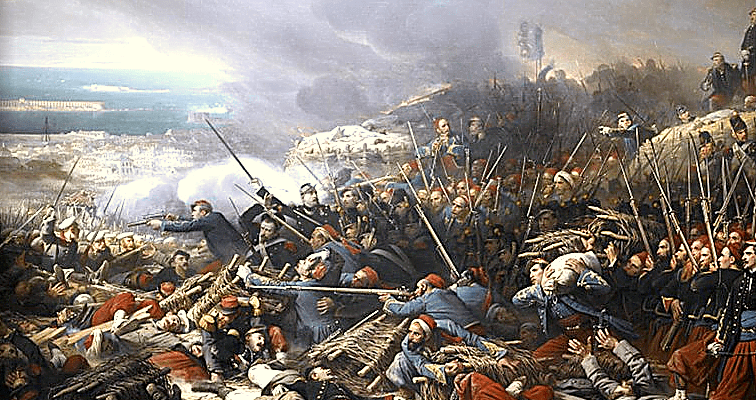
Welcome to 19th Century, a blog dedicated to exploring the fascinating events and stories of the past. In this article, we delve into the Crimean War, a pivotal conflict that shaped the geopolitical landscape of the 19th century. Join us as we unravel the complexities, key battles, and impact of this defining era in history. Stay tuned for an immersive journey through time.
The Crimean War: Unveiling the Historical Context and Significance in the 19th Century
The Crimean War was a significant event in the 19th century that unfolded in the years 1853 to 1856. It was primarily a conflict between the Russian Empire on one side and an alliance consisting of the Ottoman Empire, France, Britain, and Sardinia on the other. This war played a pivotal role in shaping European geopolitics during that time.
The underlying causes of the Crimean War were rooted in a complex web of political, territorial, and religious tensions in the region. The declining influence of the Ottoman Empire, coupled with Russia's expansionist ambitions, contributed to escalating conflicts over control of key strategic territories, such as the Crimean Peninsula and the Black Sea.
One of the most notable aspects of the Crimean War was the involvement of modern technologies and medical advancements. It was the first war to extensively use railways, photography, and telegraphs, which significantly impacted the dissemination of information and influenced public opinion across Europe. The introduction of these technologies also brought about new challenges and opportunities on the battlefield, as evidenced by the famous Siege of Sevastopol.
Moreover, the war witnessed significant developments in military medicine, largely driven by the pioneering efforts of Florence Nightingale and her team of nurses. Their work in improving sanitary conditions and implementing effective medical practices revolutionized healthcare in wartime, leading to a reduction in mortality rates among wounded soldiers.
The outcomes of the Crimean War had far-reaching consequences. While the war itself ended inconclusively, it exposed the weaknesses of traditional European powers and paved the way for significant political and military transformations in the following years. Moreover, the war marked a turning point in the diplomatic relations between European powers, setting the stage for alliances and rivalries that would shape the course of history in the 19th century.
The Crimean War holds immense historical significance in the 19th century. Its impact on European geopolitics, the adoption of modern technologies, advancements in military medicine, and the subsequent political and military transformations make it a crucial event to study in understanding the complexities of the era.
When the Crimean War Went Full FUBAR - Extra History
The BRUTAL Executions Of The German Soldiers Of Kyiv
What was the primary cause of the Crimean War?
The primary cause of the Crimean War was a dispute over the Holy Land and control of the Ottoman Empire. Throughout the 19th century, tensions arose between Russia and the Ottoman Empire due to the decline of the latter's influence in the Balkans and the growing Russian ambition to expand its influence in the region. The conflict escalated when Tsar Nicholas I of Russia sought to assert Russian dominance over Orthodox Christians in the Ottoman Empire, particularly in Palestine, which was considered holy land for various Christian denominations.
The situation worsened when Tsar Nicholas demanded the rights to protect Christian shrines in the Ottoman-controlled territories, a move that was met with resistance from the Ottomans. France, which saw itself as the protector of Catholics in the Ottoman Empire, also became involved due to its conflicting interests. Moreover, Britain, concerned about maintaining the balance of power in Europe and protecting its trade routes to India, also decided to intervene in the conflict.
The immediate trigger for the war was Russia's invasion of the Ottoman-controlled Danubian Principalities (modern-day Romania) in 1853. This act of aggression alarmed France and Britain, who feared that Russian expansion into the Balkans would upset the European balance of power and threaten their interests in the region. In response, France and Britain declared war on Russia, forming an alliance with the Ottoman Empire.
The Crimean War lasted from 1853 to 1856 and resulted in significant loss of life on all sides. It marked a turning point in European diplomacy as it revealed the vulnerabilities of the once-feared Russian military and led to a reconfiguration of alliances in Europe. In the aftermath of the war, efforts were made to maintain the territorial integrity of the Ottoman Empire, although its decline continued, eventually leading to its dissolution in the early 20th century.
What was the mid-19th century Crimean War?
The mid-19th century Crimean War was a major conflict that took place from 1853 to 1856. It was fought primarily between the Russian Empire and an alliance of the Ottoman Empire, France, Britain, and Sardinia.
The war originated from a dispute over religious rights in the holy places of Jerusalem, which was under Ottoman control. Russia, seeking to protect Orthodox Christians and extend its influence in the region, occupied the Danubian Principalities (modern-day Romania) in July 1853. This move alarmed the Ottoman Empire, leading to their declaration of war on Russia.
The Crimean War witnessed several significant battles, most notably the Siege of Sevastopol. The city, located in Crimea (now part of Ukraine), was a major Russian naval base and a strategic target for the allies. After a grueling siege, the allied forces managed to capture Sevastopol in September 1855.
This war highlighted several significant developments in military tactics and medical care. The introduction of rifled muskets and modern artillery changed the nature of warfare, resulting in higher casualties than previous conflicts. Additionally, the work of Florence Nightingale and other nurses in treating wounded soldiers led to significant improvements in medical practices and the establishment of the modern nursing profession.
The war came to an end with the signing of the Treaty of Paris in 1856. The treaty acknowledged the integrity of the Ottoman Empire but also granted Russia certain concessions. It marked a shift in the balance of power in Europe and paved the way for significant political and social changes in the region.
Overall, the Crimean War had a profound impact on European and global politics. It exposed weaknesses in military systems, triggered domestic reforms, and marked the beginning of the end for the Concert of Europe, an informal alliance among major powers that sought to maintain the status quo.
Who emerged victorious in the Crimean War of the 19th century?
In the context of the 19th century, the Crimean War was fought between several nations, including the Russian Empire and an alliance of France, Britain, the Ottoman Empire, and the Kingdom of Sardinia. Ultimately, the alliance emerged victorious in the Crimean War.
What was the Crimean War in 1850?
The Crimean War, which took place from 1853 to 1856, was a significant conflict in the 19th century. It was fought primarily between Russia on one side and an alliance of France, Britain, the Ottoman Empire, and Sardinia on the other. The war erupted due to a struggle for control over key territories in the declining Ottoman Empire.
The main causes of the Crimean War can be attributed to religious disputes, political rivalries, and imperial ambitions among the major European powers. Russia sought to protect the rights of Orthodox Christians in the Ottoman Empire, while France and Britain aimed to maintain the balance of power in Europe and secure their own interests in the region.
The conflict centered around the Crimean Peninsula in modern-day Ukraine, which housed important naval bases and trade routes. It began with a Russian invasion of the Danubian Principalities, which provoked a response from the Ottoman Empire. This led to a series of clashes and sieges, most notably the Siege of Sevastopol.
The war witnessed numerous significant events and battles, such as the Charge of the Light Brigade and the Battle of Balaclava. The appalling living conditions and lack of medical care resulted in a high casualty rate due to disease and malnutrition, leading to public outcry and reforms in military healthcare.
The Treaty of Paris, signed in 1856, ended the Crimean War. It brought about several changes, including a revision of the Treaty of Kuchuk-Kainarji, which limited the power of Russia in the Black Sea. It also established the principle of neutrality for the Ottoman Empire, ensuring the security of its territories.
The Crimean War had far-reaching consequences. It exposed the weaknesses of outdated military tactics and infrastructure, leading to significant military reforms in several countries. It also highlighted the importance of diplomacy and public opinion in international relations.
Moreover, the war significantly affected the geopolitical landscape of Europe, heralding the decline of the Ottoman Empire and setting the stage for future conflicts. The war's impact on public opinion, particularly the suffering endured by soldiers, also played a crucial role in shaping subsequent movements for reform and humanitarianism.
Overall, the Crimean War marked a significant turning point in 19th-century history, leaving a lasting impact on military strategy, international diplomacy, and the quest for social change.
Frequently Asked Questions
What were the main causes and motivations behind the Crimean War in the 19th century?
The Crimean War, which took place from 1853 to 1856, was primarily caused by a complex web of political and territorial disputes between several major powers of the time. Russia's expansionist ambitions in the Ottoman Empire, as well as its desire to secure control of the warm-water ports in the Black Sea, played a significant role in instigating the war.
One of the key motivations behind the conflict was Russia's concern for the status of Orthodox Christians in the Ottoman-controlled territories, such as modern-day Romania and Bulgaria. As the protector of Orthodox Christians, Russia sought to exert influence over these regions and gain a foothold in the strategically important Dardanelles.
Another contributing factor was the dispute over the holy places in Jerusalem. The Russian Empire claimed to be the protector of the Christian sites in the city, leading to tensions between Russia and France, which saw itself as the guardian of Catholics in the Ottoman Empire.
Additionally, the balance of power in Europe was a significant concern for other major powers, particularly Britain and France. They feared that Russian expansion would upset the stability of the region and threaten their own imperial interests. As a result, they formed an alliance with the declining Ottoman Empire.
Finally, there were also economical motivations behind the war. The Crimean Peninsula, where the conflict primarily took place, was rich in resources like coal and iron, making it an attractive target for imperial powers seeking to expand their industrial capabilities. Control over the region would also provide access to the lucrative trade routes of the Black Sea.
The Crimean War was primarily caused by Russia's expansionist ambitions, the desire to protect Orthodox Christians and gain control over strategically important territories. Political rivalries, concerns over the balance of power, and economic interests also played a significant role in igniting the conflict.
How did advancements in technology and medicine impact the strategies and outcomes of the Crimean War?
Advancements in technology and medicine played a significant role in shaping the strategies and outcomes of the Crimean War in the 19th century.
In terms of technology, the Industrial Revolution had ushered in an era of innovation, resulting in the development of new weapons and military equipment. One of the most notable advancements was the widespread use of rifled muskets, which improved accuracy and range compared to smoothbore muskets. This led to changes in infantry tactics, with soldiers being able to engage targets from further distances. Additionally, the introduction of steam-powered ships, such as ironclads and steam frigates, revolutionized naval warfare.
These technological advancements affected the strategies employed during the war. For example, the British and French forces utilized their superior firepower, made possible by rifled muskets, to gain an advantage over the Russian troops. The long-range capabilities of these rifles allowed the allies to hold positions and inflict heavy casualties on the enemy before they could launch counterattacks.
The advancements in medicine also had a profound impact on the outcomes of the war. The Crimean War is often referred to as one of the first modern wars due to the significant advancements in medical care and hygiene that emerged during this time. Pioneers like Florence Nightingale, who is considered the founder of modern nursing, introduced systematic nursing care and improved sanitation practices in military hospitals. This led to a reduction in the number of deaths caused by diseases and infections, which were rampant in previous conflicts.
Furthermore, the war highlighted the need for better medical infrastructure. The suffering of soldiers, particularly during the harsh winter months, brought attention to the inadequate facilities and lack of sufficient medical staff. As a result, significant improvements were made in the years following the conflict, leading to the establishment of military medical services and the development of field hospitals.
The advancements in technology and medicine during the 19th century had a profound impact on the strategies and outcomes of the Crimean War. The introduction of new weapons and military technology influenced the tactics employed by the allied forces, while improvements in medical care and hygiene contributed to a reduction in casualties and the overall well-being of soldiers.
What were the long-term political, social, and economic consequences of the Crimean War on Europe in the 19th century?
The Crimean War, which took place from 1853 to 1856, had significant long-term consequences for Europe in the 19th century.
Political consequences:
1. Shift in power dynamics: The war marked a shift in power dynamics among European nations. Russia's defeat led to its decline as a major player in European politics, while France and Britain gained increased influence.
2. Rise of nationalism: The war fueled nationalist sentiments in various countries involved. In Italy, for example, it contributed to the unification movement, which ultimately led to the creation of a unified Italian state in 1861.
3. Alliance system: The conflict highlighted the need for alliances to maintain a balance of power. This led to the formation of alliances such as the Austro-Prussian Alliance in 1866 and later the Triple Alliance and Triple Entente, which played a significant role in shaping the events leading up to World War I.
Social consequences:
1. Influence on public opinion: The war was extensively covered by the media, which increased public awareness and shaped public opinion. It brought attention to the harsh conditions faced by soldiers and resulted in public demand for improvements in military healthcare and sanitation.
2. Humanitarian reform movements: The war's impact on public opinion also led to the emergence of humanitarian reform movements. Florence Nightingale's efforts during the war inspired advancements in nursing and contributed to the professionalization of the field.
3. Resistance against authoritarian rule: The perceived incompetence of political leaders and high casualty rates sparked discontent and resistance against authoritarian rulers in several countries, including Russia.
Economic consequences:
1. Industrial growth and technological advancements: The war stimulated industrial production as nations had to mobilize their resources for the conflict. This resulted in increased demand for goods and services, leading to economic growth. Additionally, advances in transportation, logistics, and weapon technology were made during this period.
2. Impact on trade and global economy: The war disrupted trade routes, particularly in the Black Sea region, which had significant economic consequences. The decline of Russia's influence also opened up opportunities for other European powers to expand their trade networks.
3. Military expenditure: The conflict necessitated significant military spending, leading to increased state debts in various countries. This fiscal strain had long-term implications for government budgets and economic stability.
Overall, the Crimean War brought about a reconfiguration of power dynamics, fueled nationalist sentiments, influenced public opinion, spurred technological advancements, and had economic repercussions. Its consequences played a role in shaping European politics, society, and economy throughout the 19th century and beyond.
The Crimean War was a pivotal event that shaped the 19th century. It showcased the evolving nature of warfare, with the introduction of new technologies and strategies. The war also highlighted the power struggles between major European powers as they vied for dominance and control over key territories.
The devastating impact of this conflict on both sides cannot be understated. It resulted in significant loss of life, resources, and infrastructure. However, the war also sparked a wave of reforms and advancements in military medicine, logistics, and communication.
Furthermore, the Crimean War had far-reaching political implications, particularly in relation to the decline of the Ottoman Empire and the emergence of new powers on the global stage. It set the stage for future conflicts and redefined the balance of power in Europe.
The Crimean War serves as a stark reminder of the human cost of war, and the importance of diplomatic efforts and peaceful resolutions. It laid the groundwork for the development of international organizations like the Red Cross, emphasizing the need for humanitarian intervention in times of conflict.
In examining the Crimean War within the context of the 19th century, it becomes clear that this conflict was a turning point in history. It not only exposed the vulnerabilities and shortcomings of outdated military strategies, but also catalyzed significant changes and advancements that would shape the future of warfare.